
Scalia and the Case of the Dead Constitution
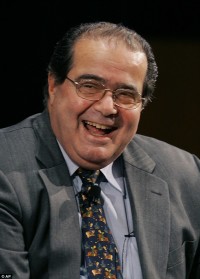
Antonin Scalia was known for constitutionalism, humor, and mischievousness. All three were on display when he used to...
Planned Parenthood and America’s Two Moralities
“The depravity of these tactics and the invasion — the willingness of this group to invade the most personal, private...

What you need to know about the bill to defund Planned Parenthood
It really should be called the Women’s Affordable Healthcare Act, for all it does is shift the yearly...

Follow your inkstincts, Brad.
Brad Pitt: I don’t want my daughters to get tattoos. Follow your inkstincts, Brad. The issue is not the...

The First Step in Finding God’s Will
If you aren’t primarily interested in doing God’s will, you can be assured you will never find it. It is a universal...

Obamacare—it’s about control, stupid!
If you want to understand progressive politics, you need to read Noam Scheiber’s article, How Obamacare...
Grabbing the Duck by the Horns
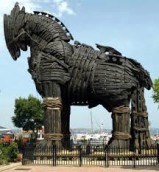
From the time Jesus walked the earth, he has used controversy to force his disciples to grow up (Mat 16.13-15). He...

In Defense of Plain Speech
Phil Robertson was already a household name as the patriarch of the popular Duck Dynasty clan, but after his...

Rand Paul wants Chief Justice Roberts sitting at the Obamacare table.
There is a rough sense of justice that says that bad cooks ought to eat their own cooking. And with that, God agrees...

The heart of the crisis of our times.
“At the heart of the crisis of our times lies the cold belief of millions, avowed or unavowed, that the death...
“Give me liberty or give me death.”
America has always been about freedom. But then, so has every tyrant. Has there been a tyrant in the history of the...
From one of the best books you’ve never read . . .
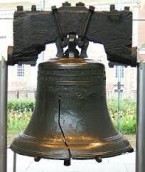
Witness by Whittaker Chambers: My son was about two years old when I carried him to the car where his five-year old...
Scalia nails it.
“Some might conclude that this loaf could have used awhile longer in the oven. But that would be wrong; it is...

What is Calvinism really about?
I recently began reading for the first time (shame!) Abraham Kuyper’s classic Lectures on Calvinism which he gave at...
Powerful! LA Senator Elbert Guillory speaks the truth.
This is powerful, both because it is true and because Guillory knows he is going to pay a price for saying it but...
Love: The Point of 1Corinthians.
This is the second in a series on Christian love. You can read the first post here: The Endless Quest for Love. Love...
What is the biblical purpose of the church?
I have been giving a fair amount of thought recently to the question of how to express in a single sentence the...
Modern America and Ancient Rome
Like ancient Rome, modern American is increasingly worshiping her own genius and preaching her own gospel. American...

“Trajectory: Easter Tunnel”
My daughter, Gwen, celebrates in this poem a wonderful but often unrecognized truth about Easter: resurrection is not...

Amazing! Your kids will love this!
The Mystery of Prince Rupert’s Drop [embedplusvideo height=”315″ width=”560″...

John Roberts, the Man Who Would Be Chief
Following Chief Justice John Roberts’ opinion upholding the constitutionality of the Affordable Care Act (“Obama...

Highlights du jour – Mar 25
* Gay marriage takes center stage at the Supreme Court this week as two cases will be argued, one on Tuesday and the...
The Endless Quest for Love
If there is anything the world is convinced of, it is that happiness depends on loving and being loved. If there is...

Leithart’s thoughts after the Wilson-Sullivan gay marriage debate.
“Perhaps Christians are called to do no more than speak the truth without worrying about persuasiveness....
More golf for the President (and Congress)!
The press is in a tizzy about President Obama’s private (as in press free) golf outing with Tiger Woods Saturday at...

How do you like living under a different lord?
Christians in America long ago restricted the lordship of Christ to a shrunken area called “spiritual...

The Constitution, Dead or Alive?
Supreme Court Justice Antonin Scalia caused a commotion recently when he said he tells visiting school children that...
Richard III and The Daughter of Time
Today’s headlines trumpeting the remarkable discovery of Richard III’s remains gives me an excuse to...

Eyes to see and ears to hear.
Jesus used this terminology often. (Mat 11.15; 13.9, 43; Mark 4.9, 23; 7.16; Luke 8.8; 14.35.) When he did so, he...
Fervency!
“Remember, it is the remark of old and experienced men, that very few men, and very few ministers, keep up to...
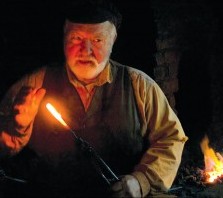
Men and Women, Shovels and Spoons
Shovels and spoons look similar and can do a lot of the same things. Most shovels are bigger and stronger than most...

What is Roe v. Wade?
On the 40th anniversary of Roe v. Wade, most young people think it is a discussion of the merits of traversing water...

Cutting through crime statistics.
Here is a very interesting video on crime statistics and their use by politicians and media in the current frenzy...

My favorite “Wayfaring Stranger”
Of all the versions I have heard of “Wayfaring Stranger,” this is my favorite. This is Tennessee Ernie...
Embracing God’s sovereignty
Do you believe the promise of Romans 8.28, that God works all things together for good to those who love Him? If so,...
Sometimes it takes a tragedy to know what we know.
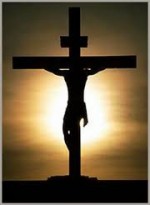
Thoughts on the Sandy Hook Elementary School slaughter. “He has put eternity in their hearts . . . .”...

A Christian Reassessment
Wednesday, November 7, 2012 The election is over, and the political reassessments are well under way. They will...

When man is small and God is big . . .
“When man is small and God is big, man is free. When God is small and man is big, tyranny is on its way.”...

Heaven and Hell
Entrance to heaven or hell is not a departure from the path you have been on but an arrival at the destination toward...

Hell and freedom.
We like to believe our choices are significant and even to say that they have consequences, which is another way of...

Here’s our problem!
You think it’s the politicians? It’s the people who vote for them! The funniest, and saddest, thing about...

False ideas
False ideas are the greatest obstacles to the reception of the gospel. We may preach with all the fervor of a...
Jargon, not argument.
Screwtape to Wormwood: Your man has been accustomed, ever since he was a boy, to having a dozen incompatible...
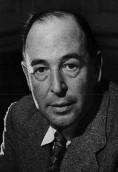
The nature of unbelief.
I had motive for not wanting the world to have a meaning; consequently I assumed that it had none, and was able...
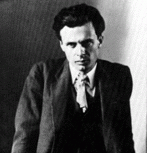
The psychology of Washington, D.C.
Walter Williams, Professor of Economics at George Mason University and popular commentator, published an...
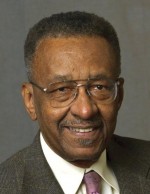
“When the people find they can vote themselves money . . .”
“When the people find that they can vote themselves money, that will herald the end of the republic.” ...
Prayer for the Kingdom
This beautiful prayer was offered by Casey Christopher during worship today: Great God Almighty and Father in Heaven,...

Forgiveness
At Growth Group Wednesday night, we got into an interesting discussion on what it means to forgive. One of the things...
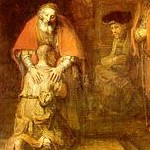
Lord’s Day prayer
We extol you, O God our Father, For you have lifted us up and have not let our enemies rejoice over us. We cried to...
Best Little Golf Video
This is one of the best little golf videos you will see. If you aren’t into golf, enjoy the music. If you are...

About the proprietor

Christian, husband, father, pastor, grandfather (How'd that happen?), adjunct professor, sometime composer, former lawyer, former military, former Floridian turned Idahoan, former basketballer turned golfer—that about sums it up. —Alan Burrow
 |
Subscribe to Updates by Email |
 | Subscribe to RSS Feed |
